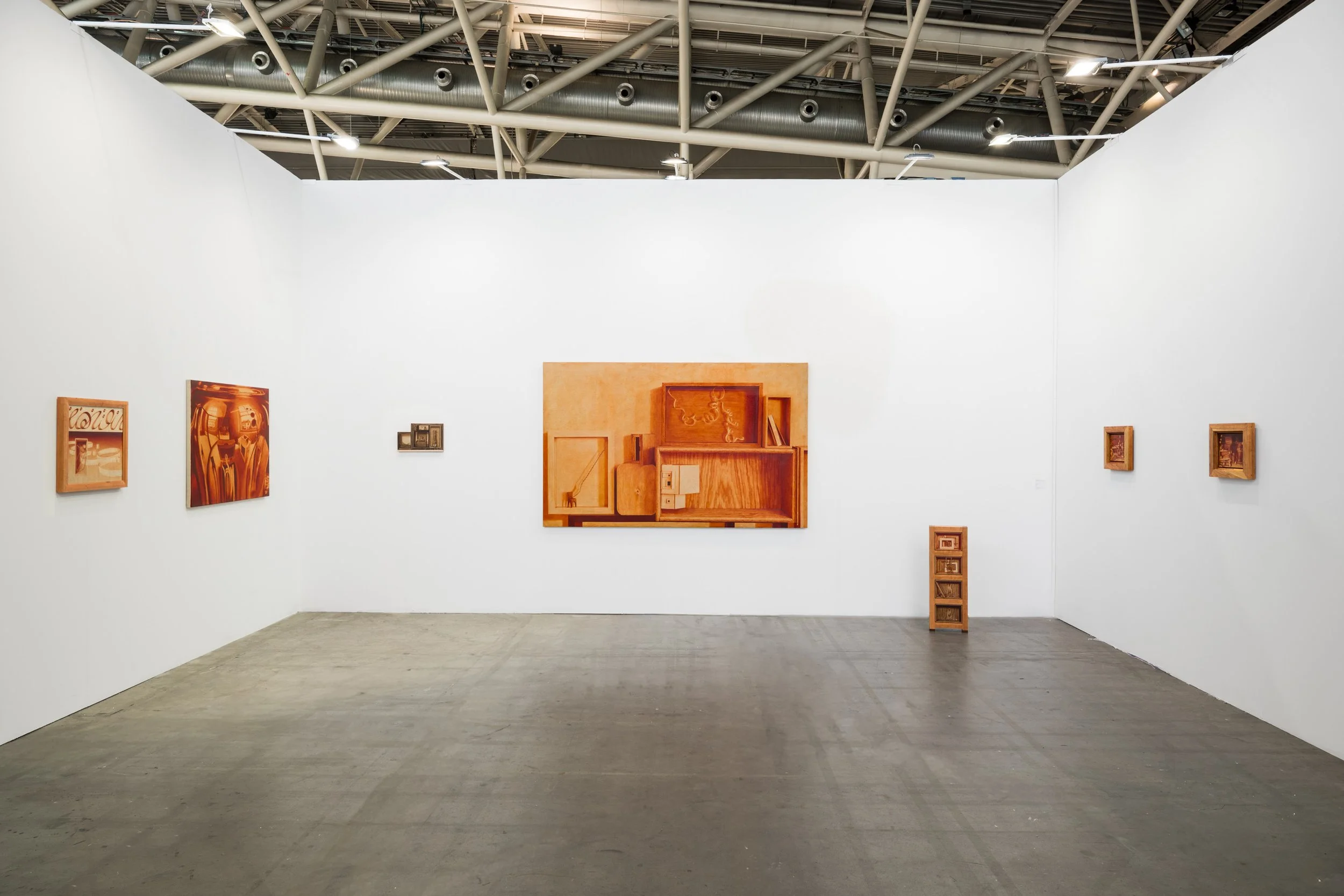
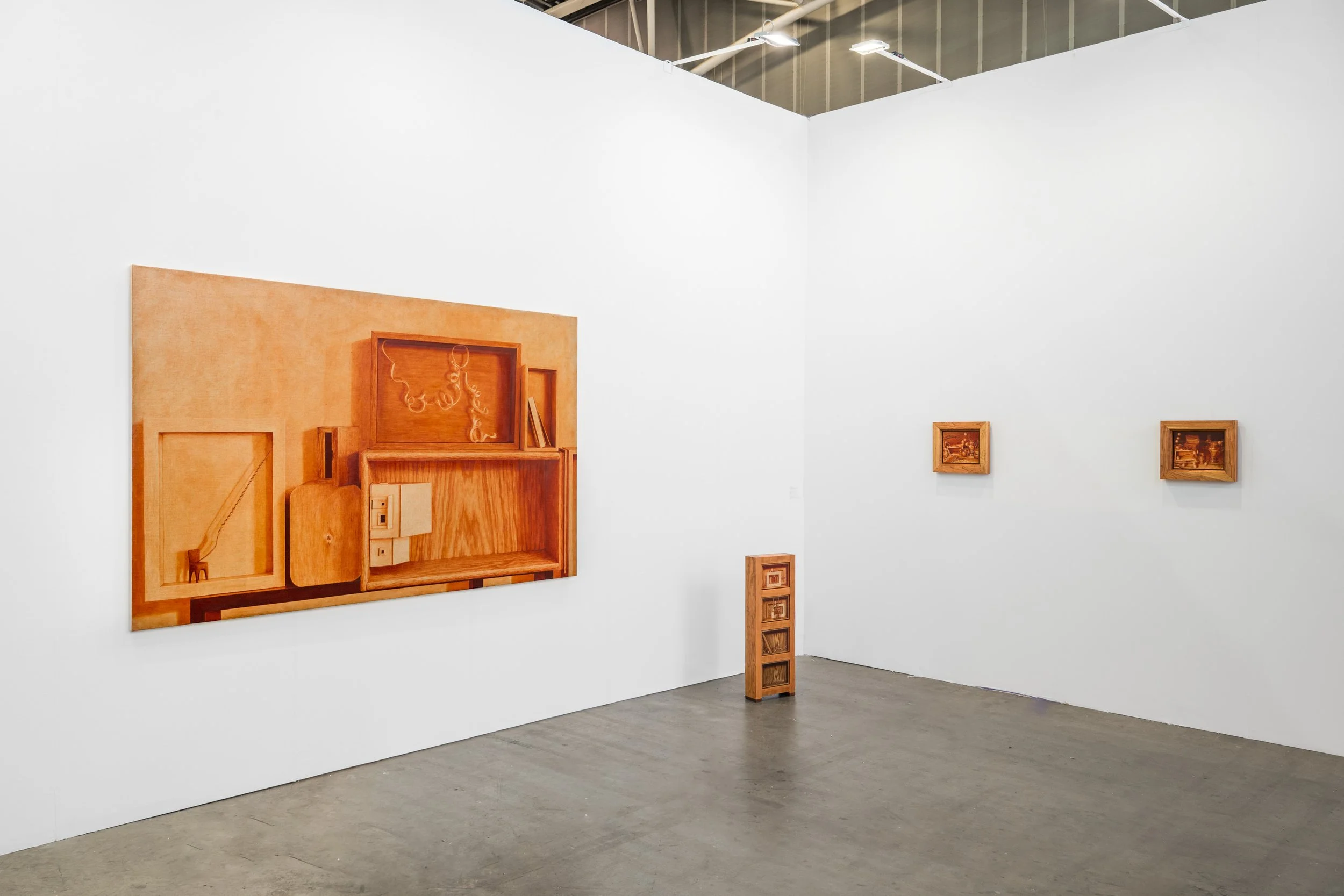
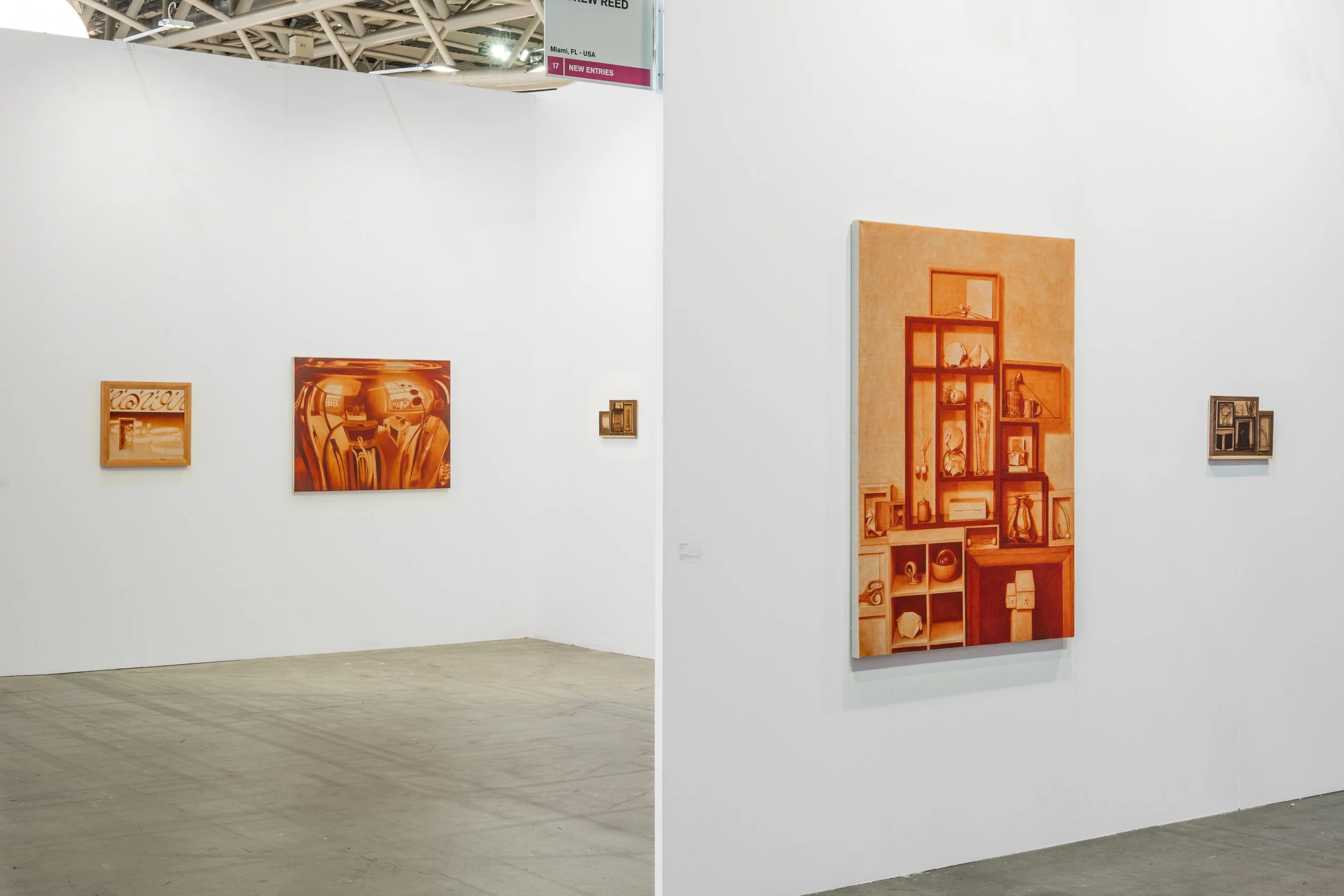
The senseless uncertainty of life doesn’t inspire stability in one’s self-image. Just as you feel you understand who you are, just as you arrange the narrative of your life into order, something occurs which challenges that vision of yourself, and you are forced to restructure who you are now with who you used to be. The struggle, the constant rearranging and reimagining, is required to create a resilient “Me.” In this body of work, Brazilian-Austrian artist Patricia Geyerhahn skillfully paints and repaints objects in shelves, voids, and suspended in space, rendering a visual language that illustrates the mental processes that form our sense of self.
Never in Bad Faith references Jean-Paul Sartre’s concept of “bad faith”: the act of lying to one’s self about the innate freedom of existence by prescribing statistic definitions of who we are. In connection with the work, the title claims that the attempt to provide enough malleable structure in one’s psyche to integrate the complicated facts of one’s life with the absurdity of existence is not an attempt at self-deception, but rather a necessary act to avoid despair in meaninglessness.
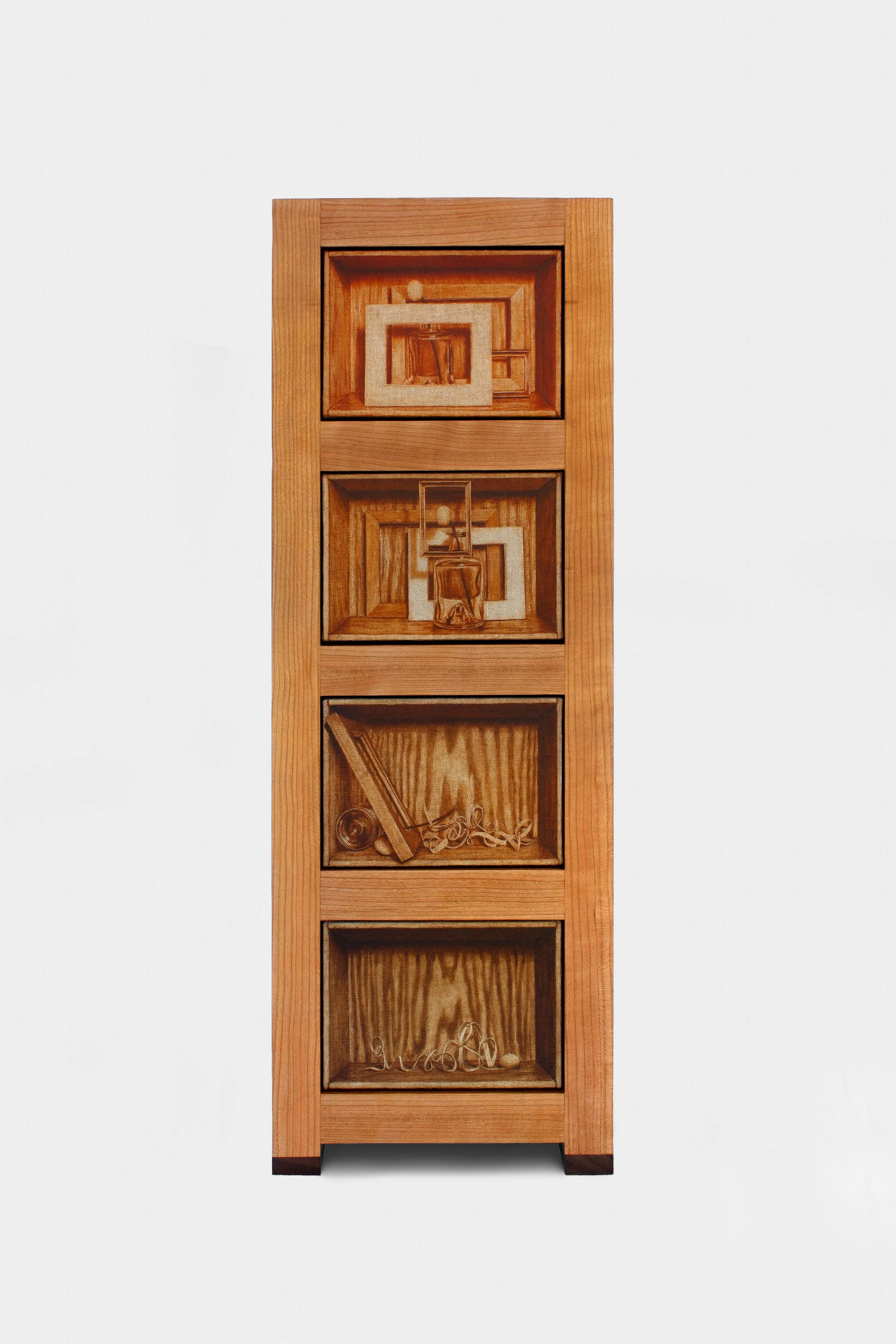
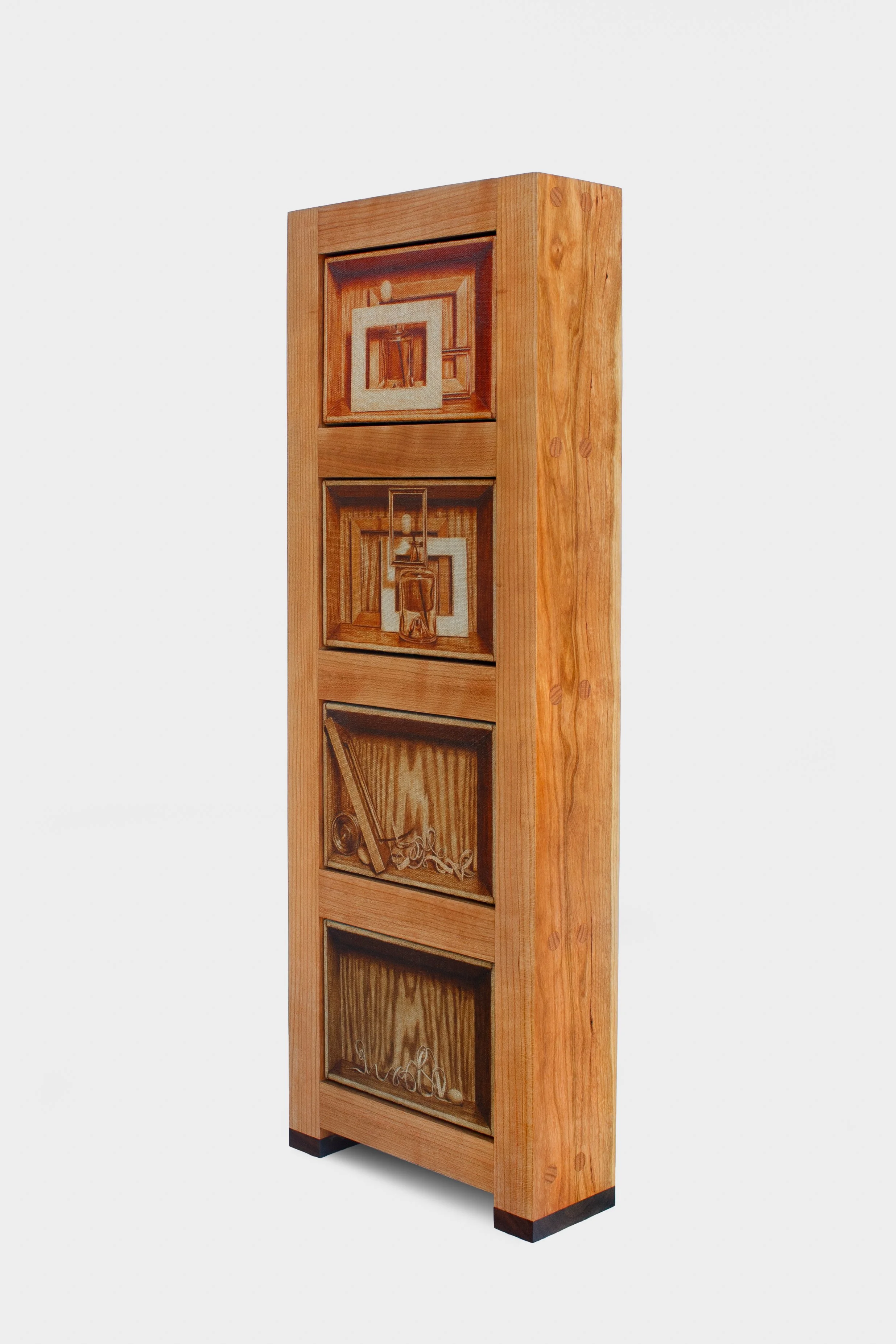
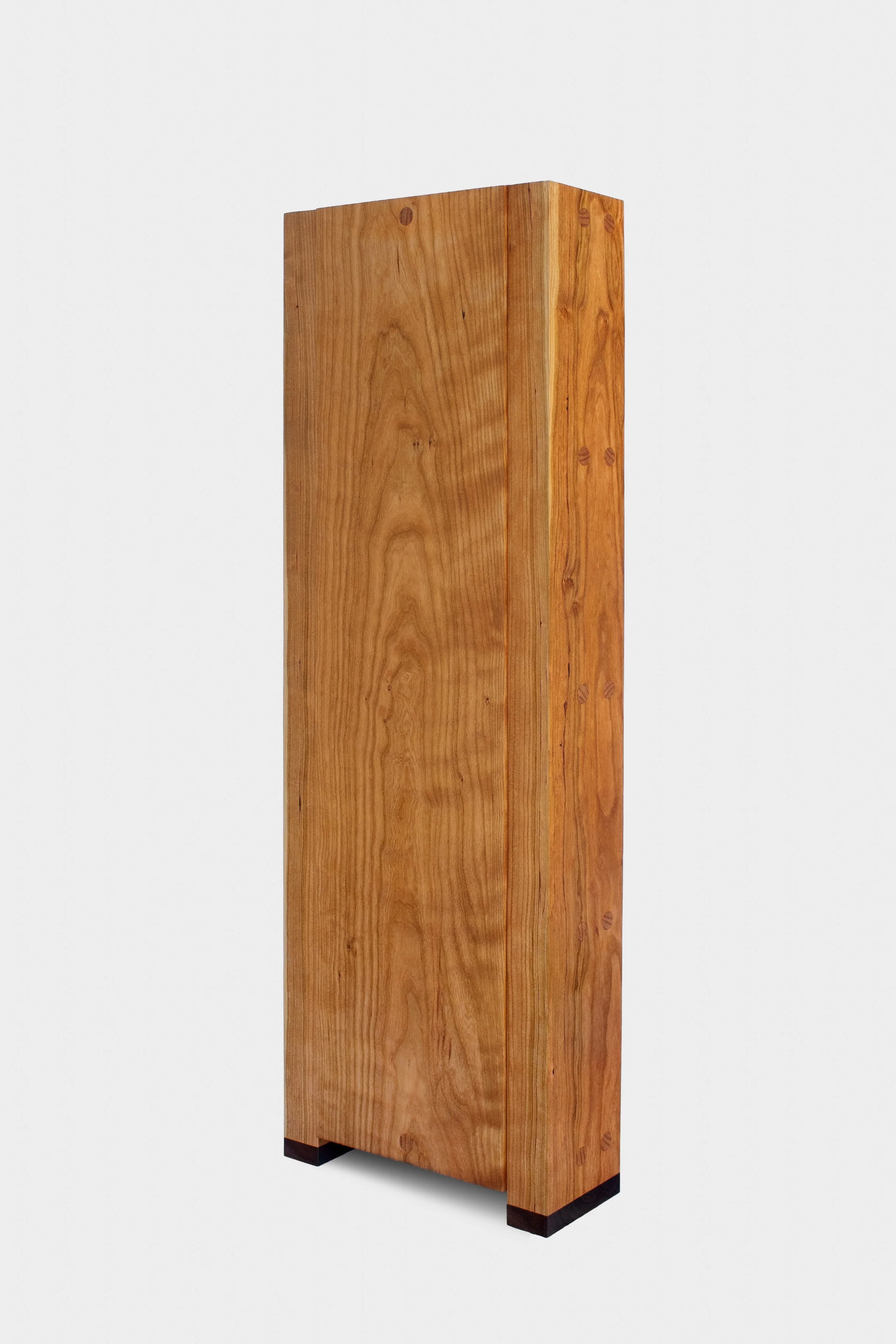
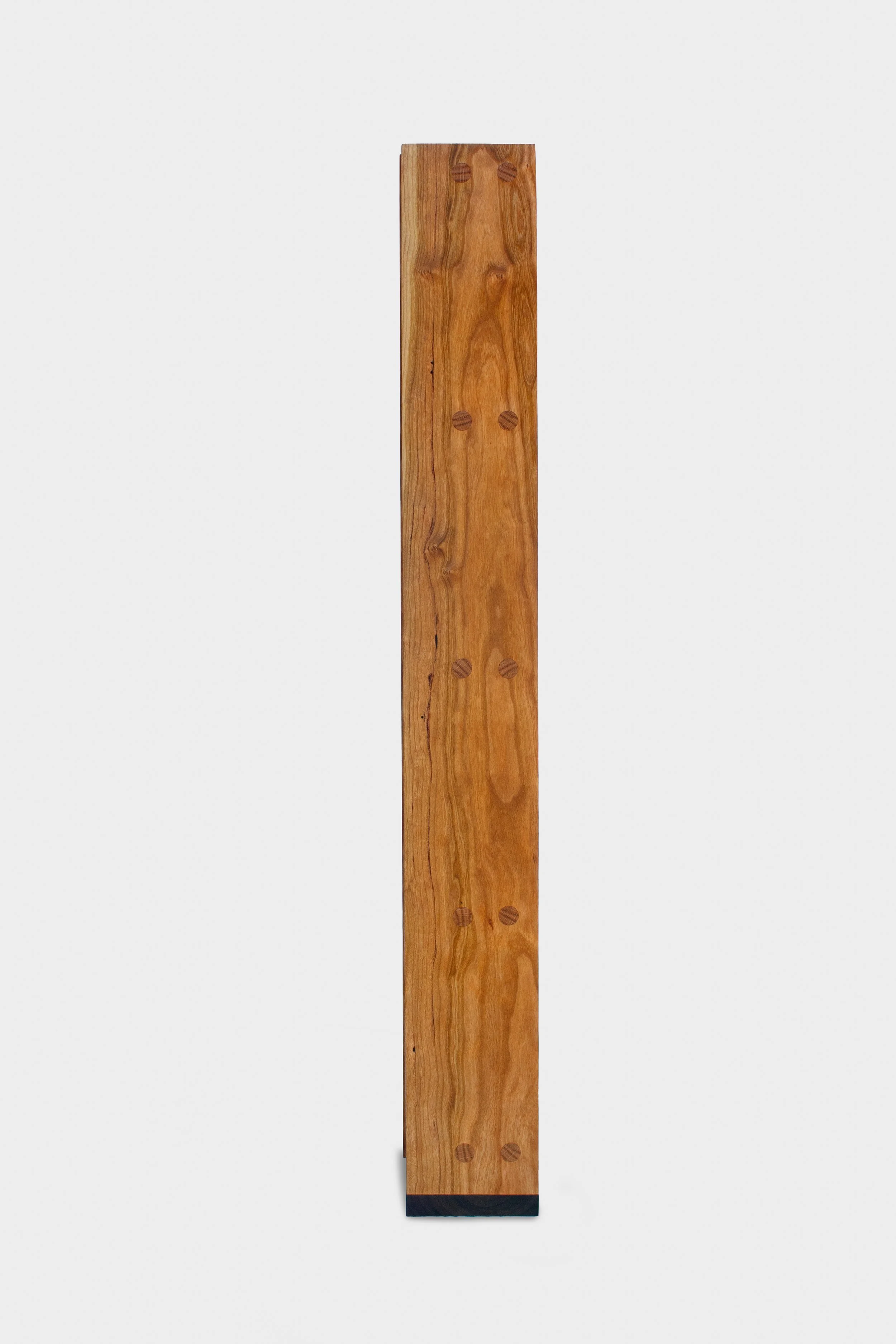
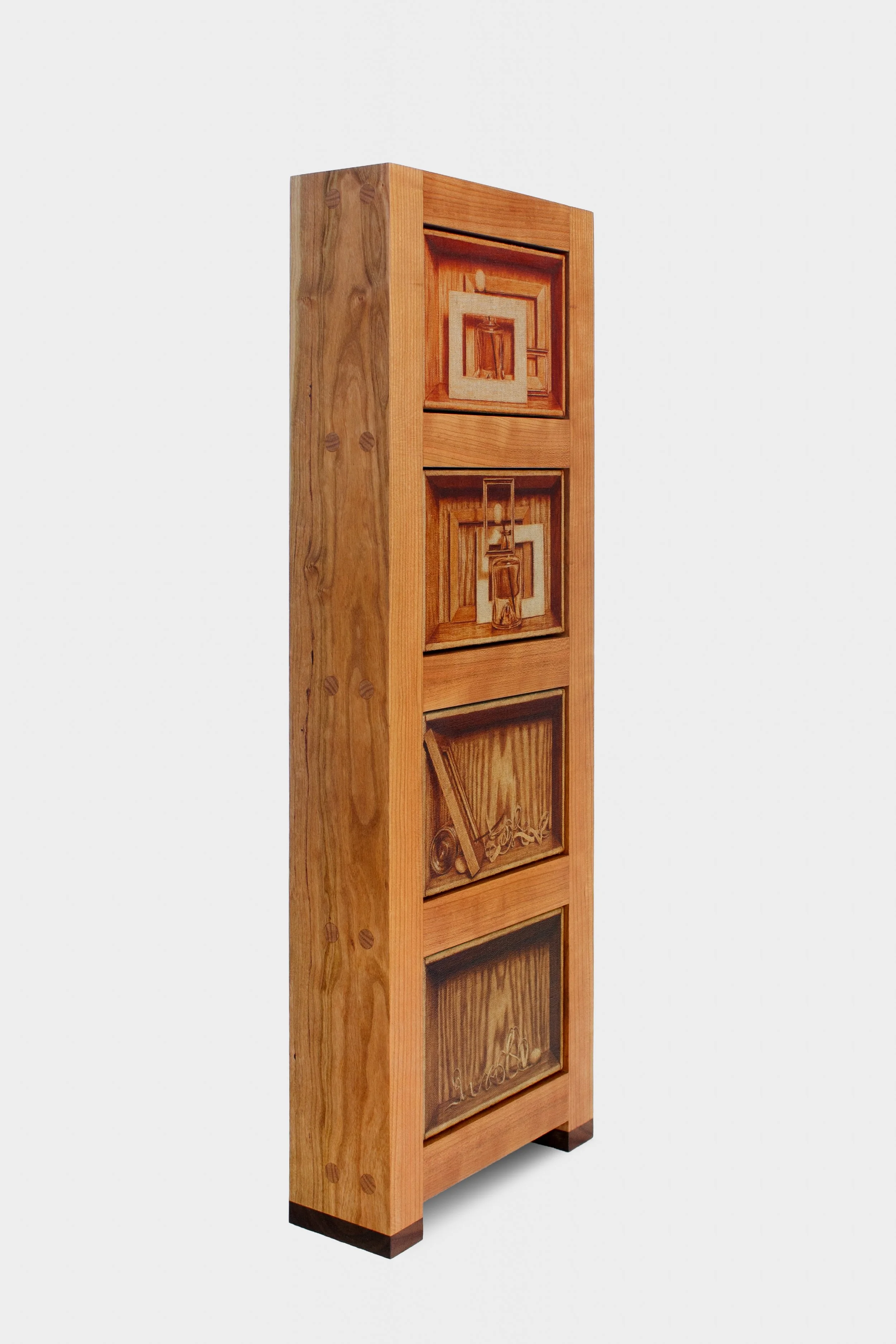
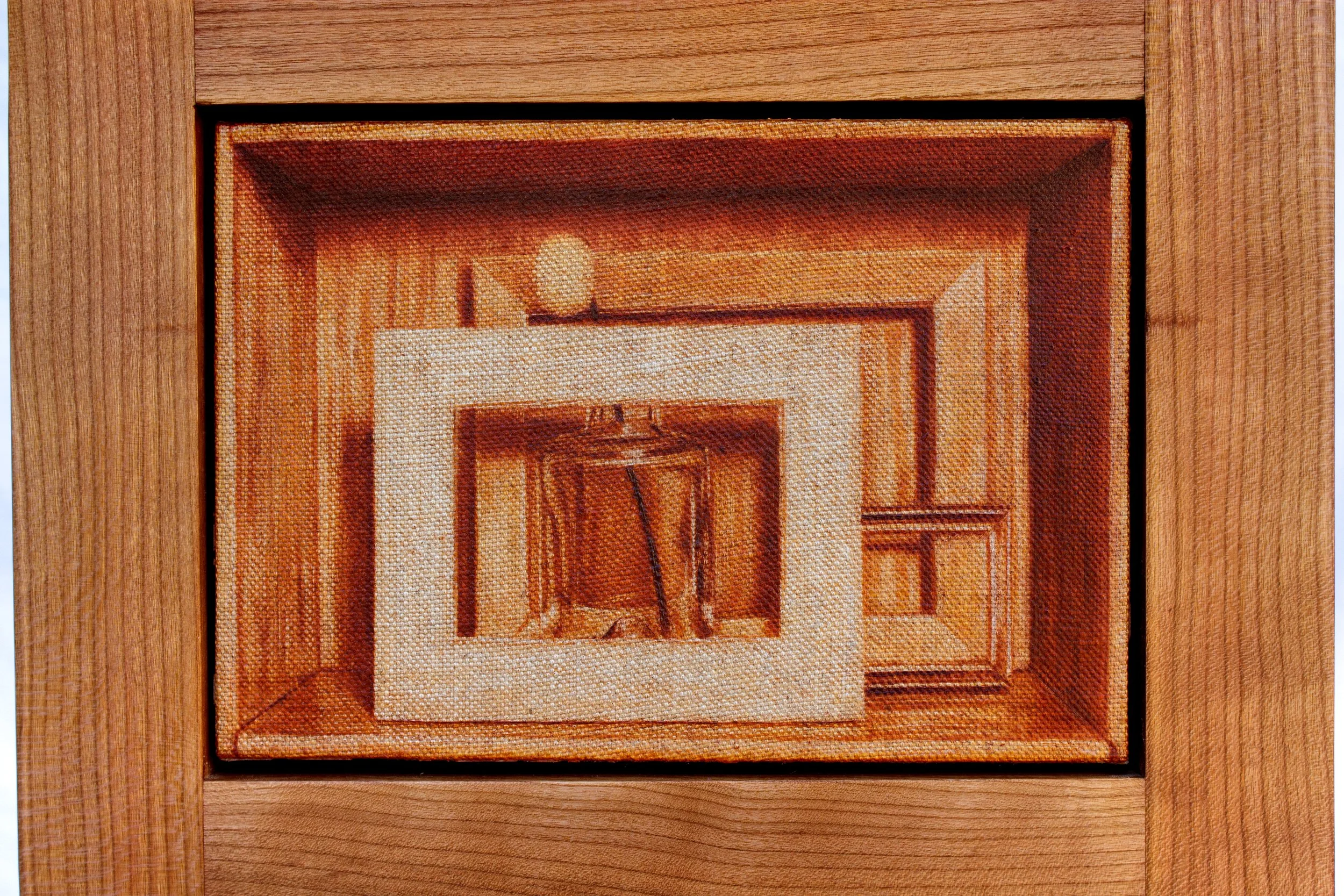
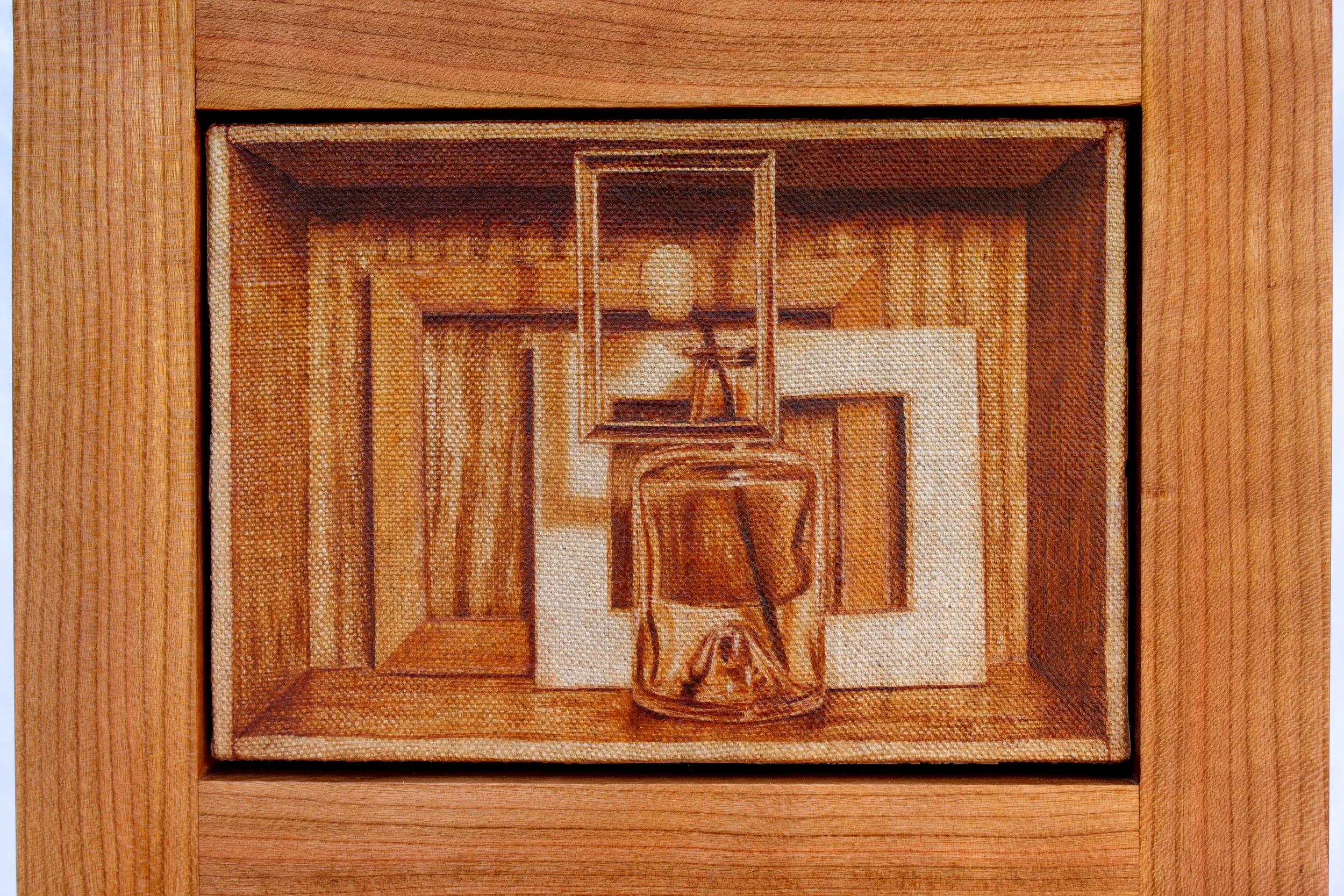
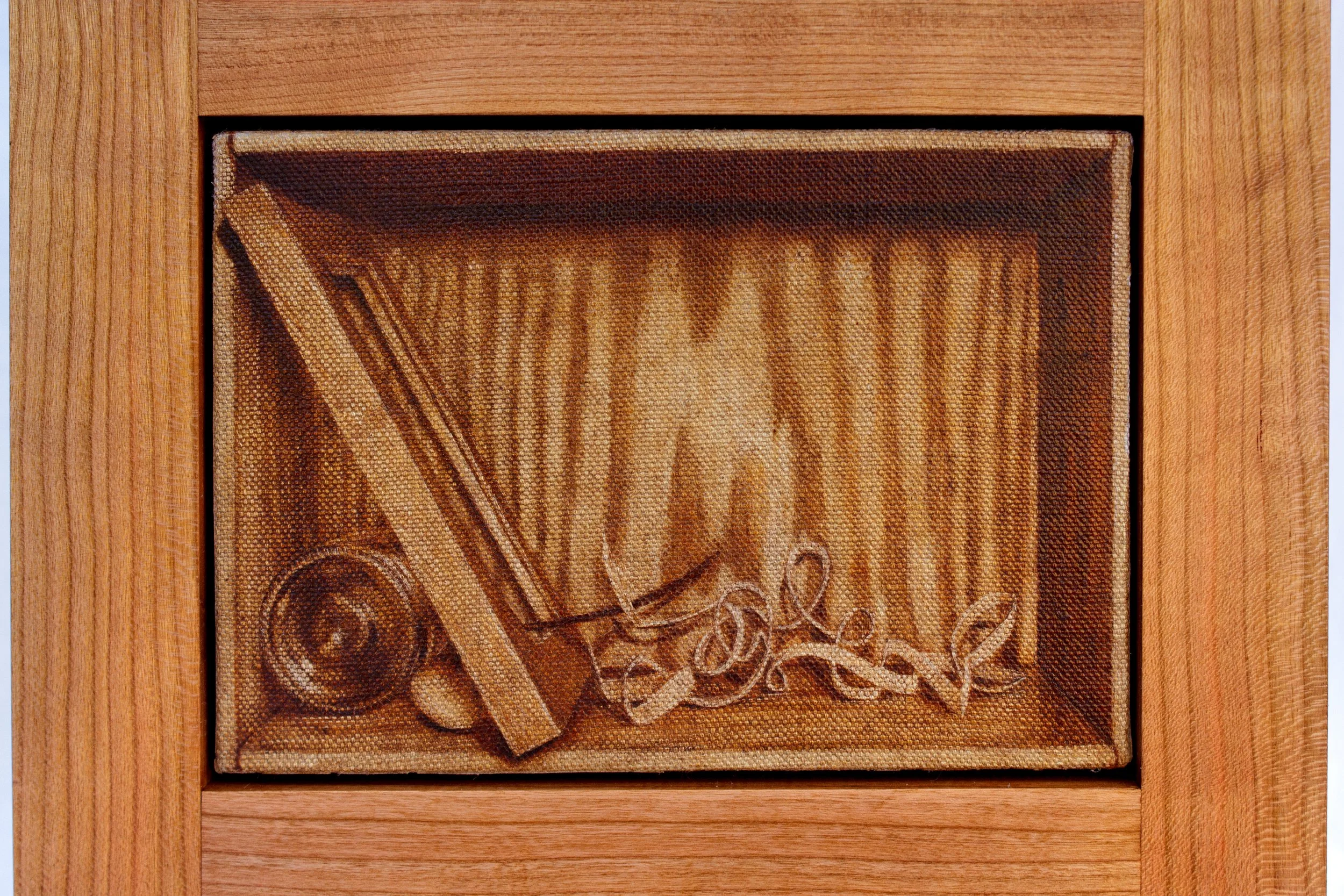
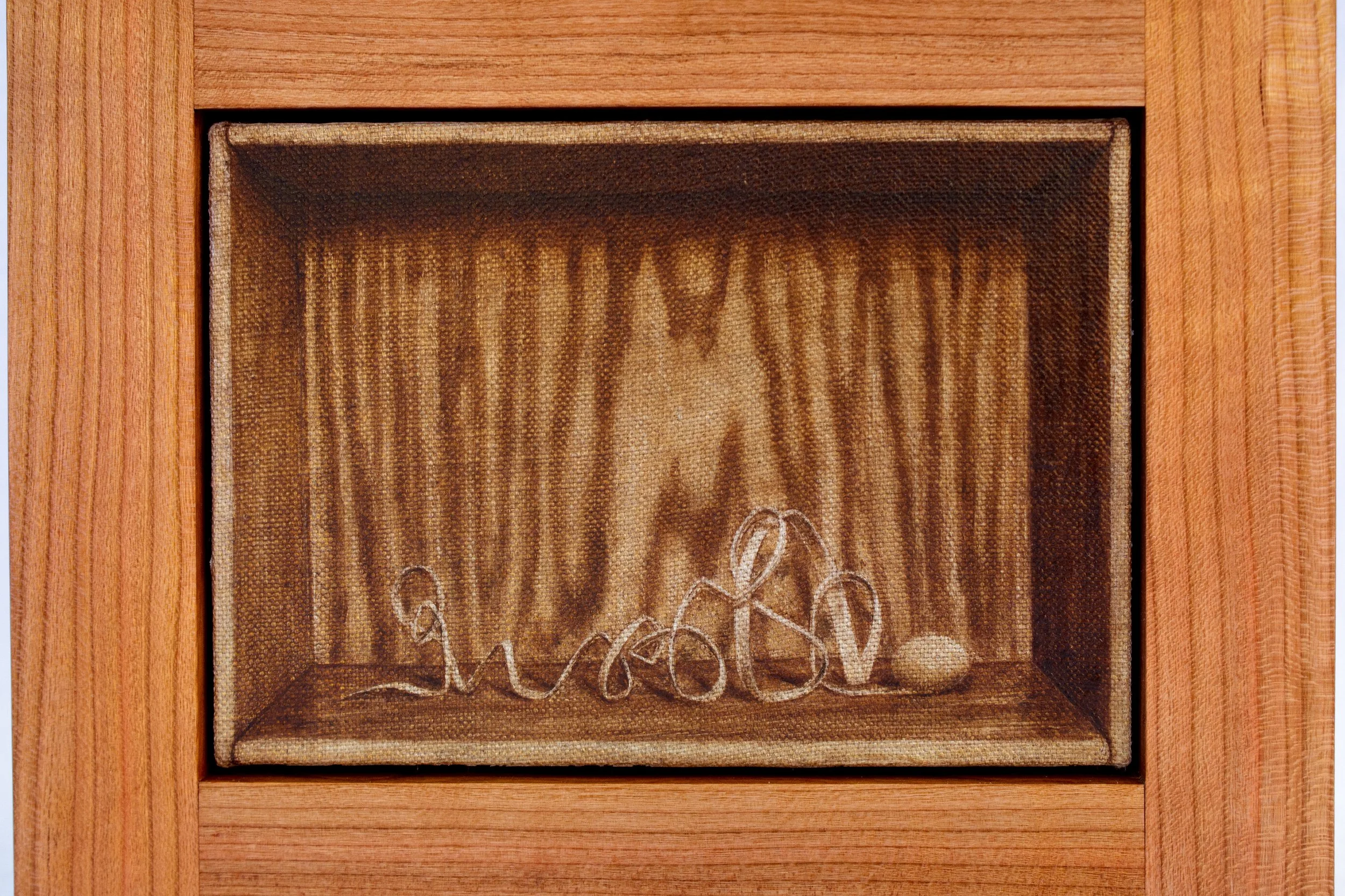
Precariously stacked shelves contain microcosms, scenes where forks carefully spear restful seats, homes may or may not welcome you with a door, or flowers are trapped under vases rather than preserved within them. Each scene in itself contains a story, of triumph or struggle, which is organized and placed within the whole. This is especially seen in works like Self-Portrait and Core, where, both with the titles and the static compositions the artist indicates a clear narrative of (her)Self. In Self-Portrait, we enter the visual lexicon of Geyerhahn, a dictionary of her myriad references and world-building. In the presentation’s more unstable moments, with works like Rearranging #1 and Rearranging #2, organization breaks down and is reformed, or, such as in Hyperfocus, by analyzing a scene too closely one’s relationship between self and surrounding disintegrates. Even in others, like Mimicking, language itself becomes only meaningless shapes and loops, a poor imitation of that which it is trying to describe. Processing on Display, meanwhile, comprises Geyerhahn’s first free-standing sculpture, fabricated by the artist with the canvases inset into the structure. Here, trompe l’oeil quite literally converges with three dimensional space.
Geyerhahn’s inverted painting method combined with a restrained palette lends itself to a meditative relationship between viewer and painting. By maintaining highlights transparent and shadows opaque light is able to pass through layers of paint to emit an inner glow. This magnetic reflection draws viewers into the subtle world of the painting, at which point one is invited to interpret the lexicon presented.
As an ex-expat now immigrant, Geyerhahn’s particular sensitivity to the instability of the Self in the face of globalization speaks to the ever present yet especially relevant generational struggle with the question “who am I?” To this point, Geyerhahn selects objects and creates scenes with unspecific meanings, playing into the ambiguity of symbolism and universality of human perception. The lack of identifiable locations and people allows for any viewer, regardless of who They are, to perceive the pieces as their own.
Self Portrait, 60 x 44 inches, oil on linen, 2026.
Hyperfocus, 36 x 48 inches inches, oil on linen, 2026.
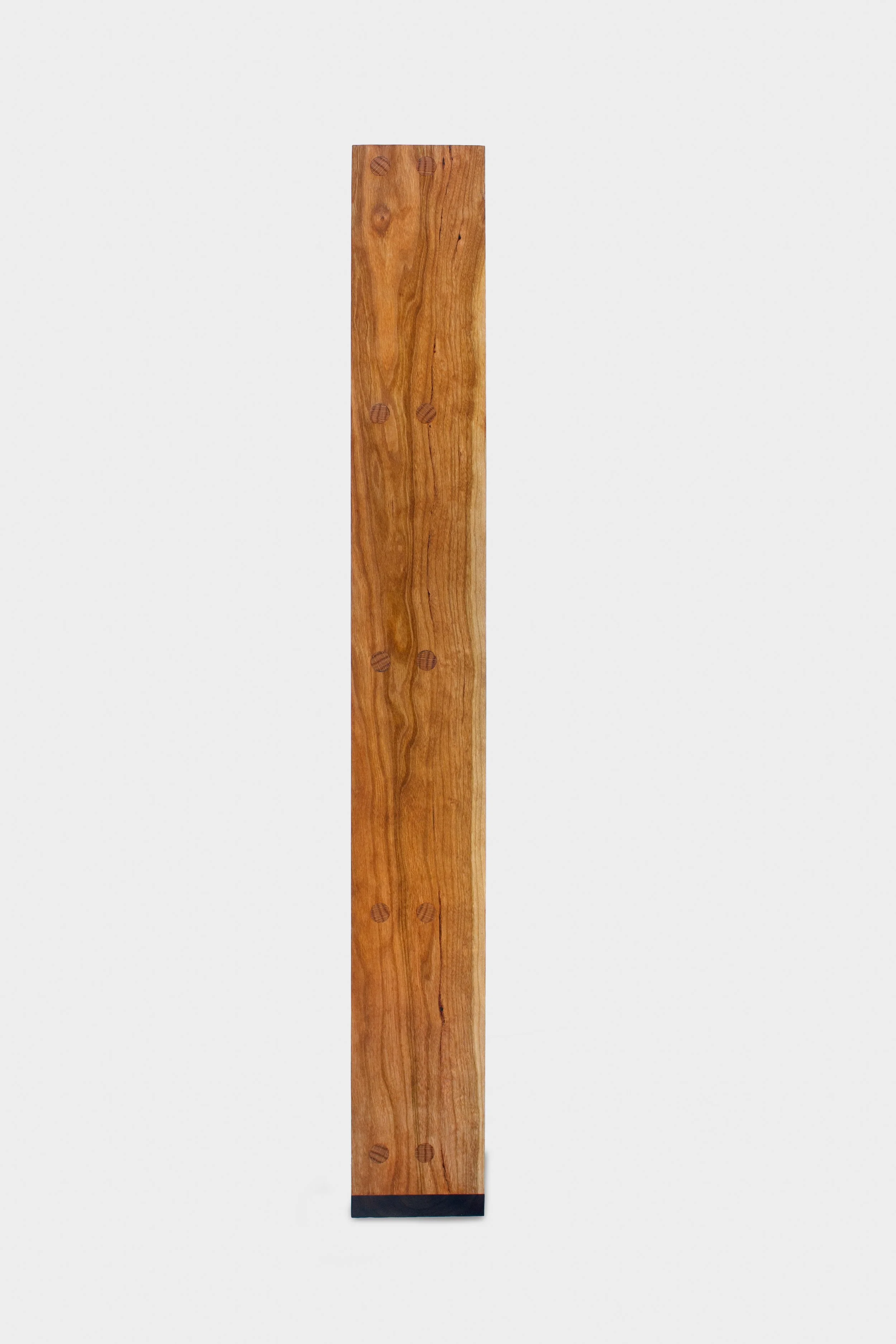
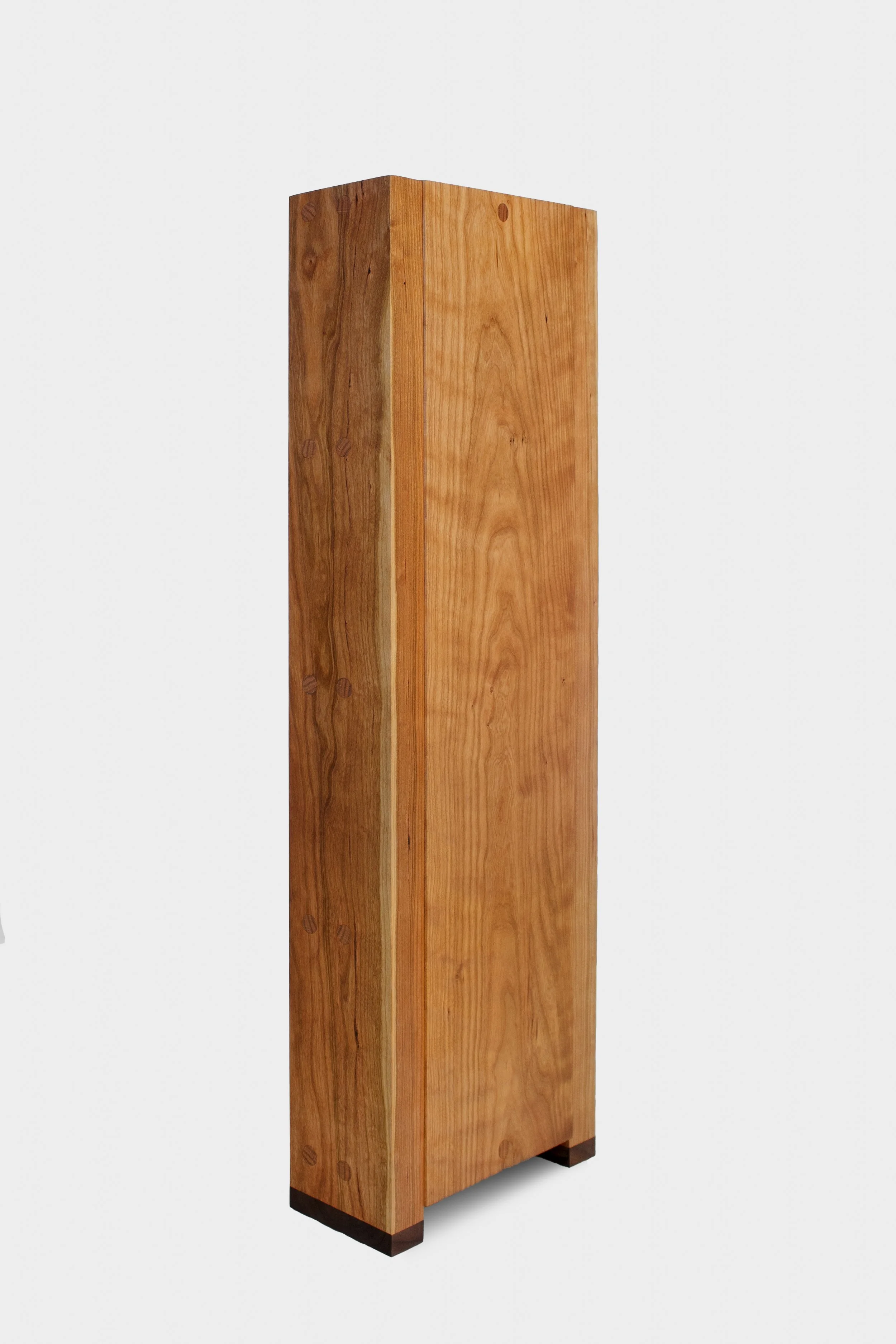
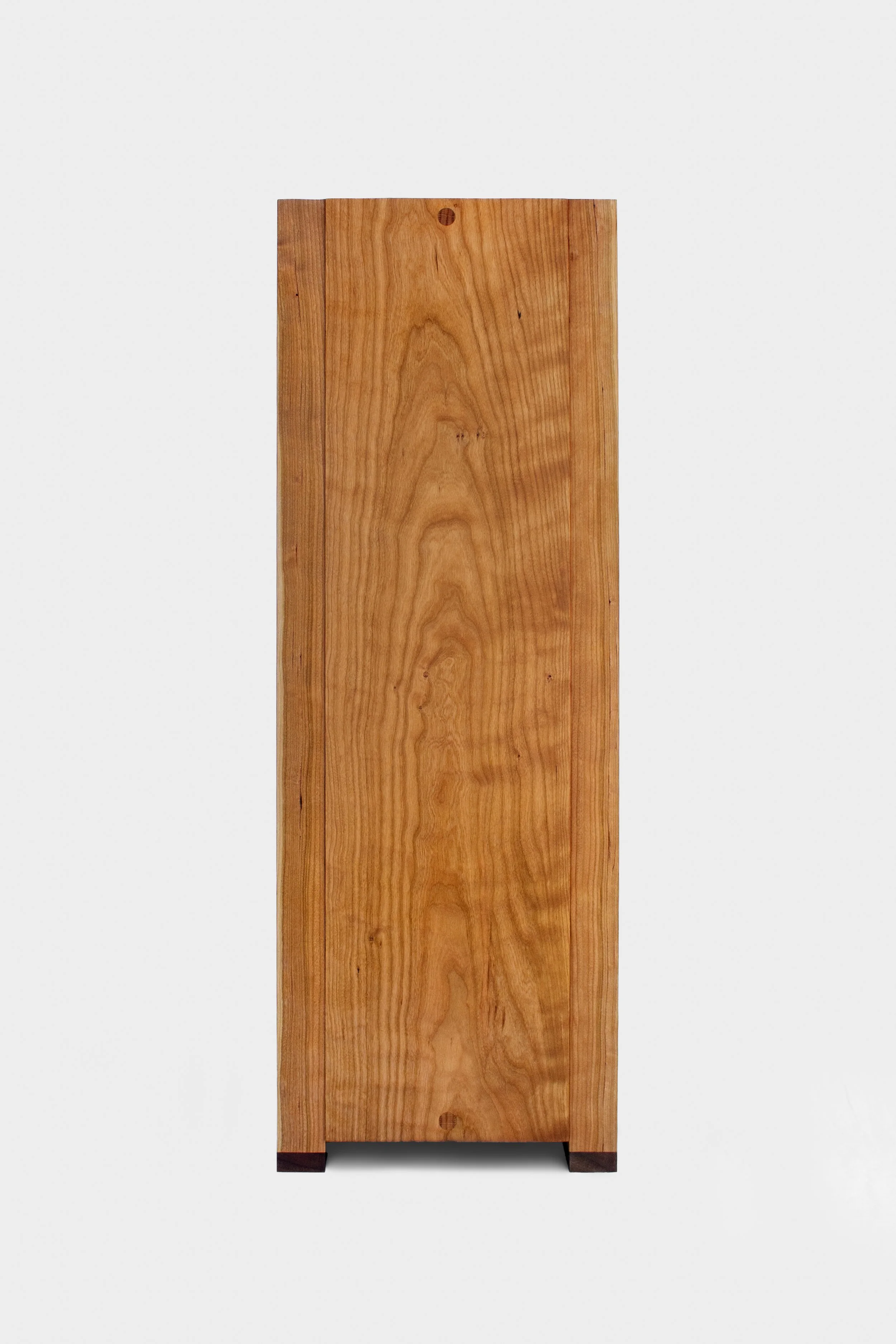
Processing on Display, 36 x 8 1/2 x 5 inches, cherry wood, walnut wood, oil on linen mounted on panel, 2026.
Core, 60 x 96 inches, oil on linen, 2026.
Rearranging (Day), 13 x 15 inches, oil on linen mounted on panel in artist frame, 2026.
Rearranging (Night), 13 x 15 inches, oil on linen mounted on panel in artist frame, 2026.
Memórias de Cuidados (Memories of Care), 10 x 15 inches, oil on linen mounted on panel in artist frame, 2026.
Memórias de Casa (Memories of Home), 10 x 16 inches, oil on linen mounted on panel in artist frame, 2026.
Mimicking, 24 x 26 inches, oil on linen in artist frame, 2026.